Food – one of the three pillars of the Arrenberg Climate District
03.05.2026
Edible Arrenberg
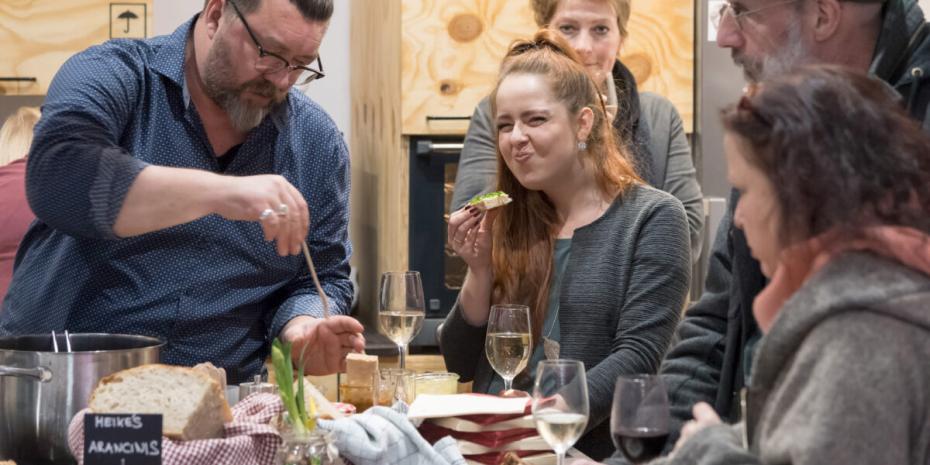
The vision for the Arrenberg Climate Neighborhood is meant to appeal to the palate as well, because a healthy climate starts with food. That’s why the “Edible Arrenberg” is also part of the Climate Neighborhood. Under this motto, the vision is brought to life for residents in a delightful way: On the one hand, the climate in the neighborhood is to be promoted through shared meals, cooking, and mindful enjoyment. On the other hand, campaigns and experiences are designed to promote climate-neutral consumption of sustainable, regional, and fair-trade products.
It all began with an initial meeting in February 2015. Since then, interested and curious individuals have been meeting on an irregular basis—three to four times a year—to discuss a key topic with a theoretical focus and to plan concrete actions and new projects. A diverse array of individual projects aims to encourage a mindful approach to food, healthy eating, and the active, community-driven development of the neighborhood.
(Kitchen photo)
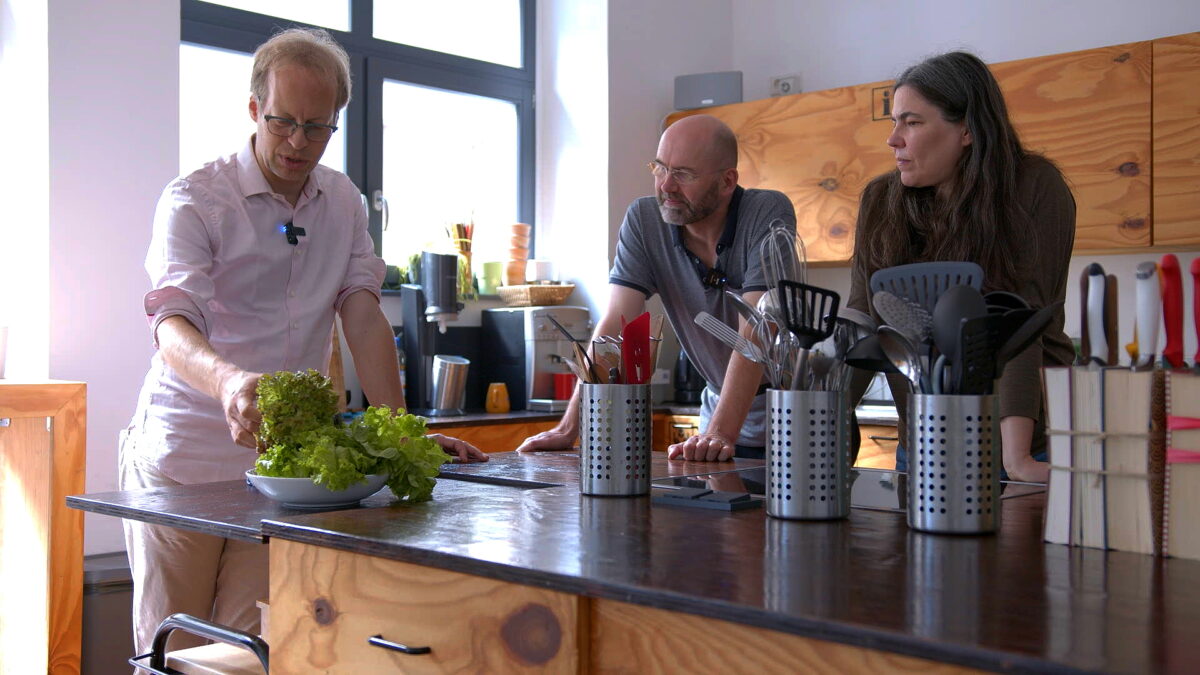
The neighborhood kitchen at the community center is a visible symbol of the "Edible Arrenberg" initiative. Built from recycled materials, equipped with donated tableware, and funded by donations, this kitchen serves as a gathering place and a catalyst for many things.
(Photo: Restaurant Day)
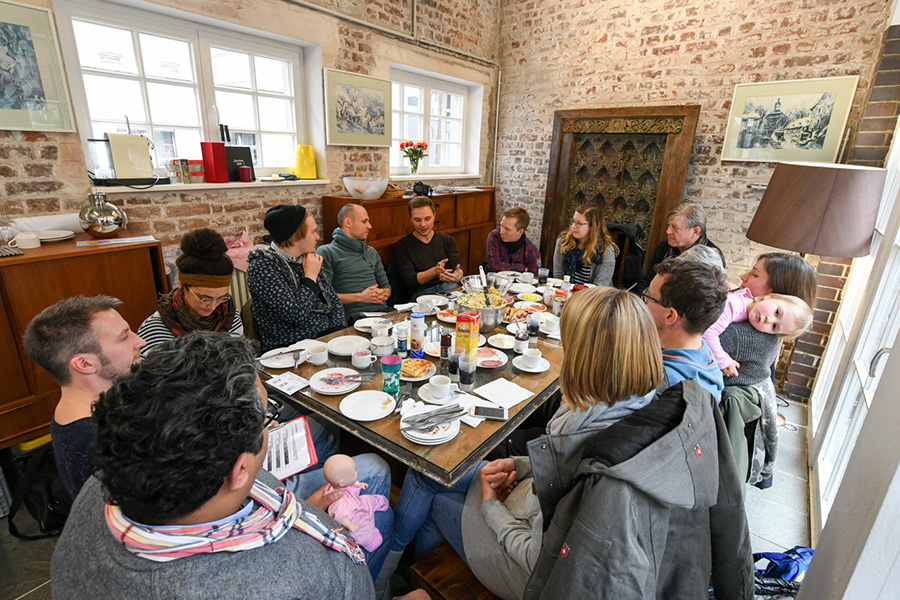
On Restaurant Day in Arrenberg, private pop-up restaurants open for a few hours and invite neighbors, friends, and curious visitors. Restaurant Day is celebrated twice a year in Arrenberg and other Wuppertal neighborhoods: in mid-May and mid-November.

(Photo: Food Savers)
Once a week, food rescue takes place at the community center: saving and sharing food instead of throwing it away.
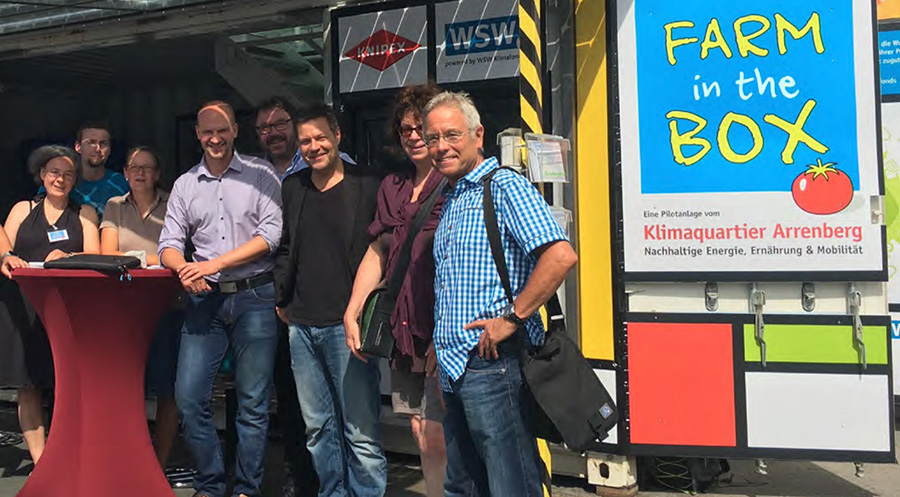
An aquaponics system can be used to produce food in an urban setting with minimal energy and space consumption. The Farmbox successfully demonstrates this on a small scale.
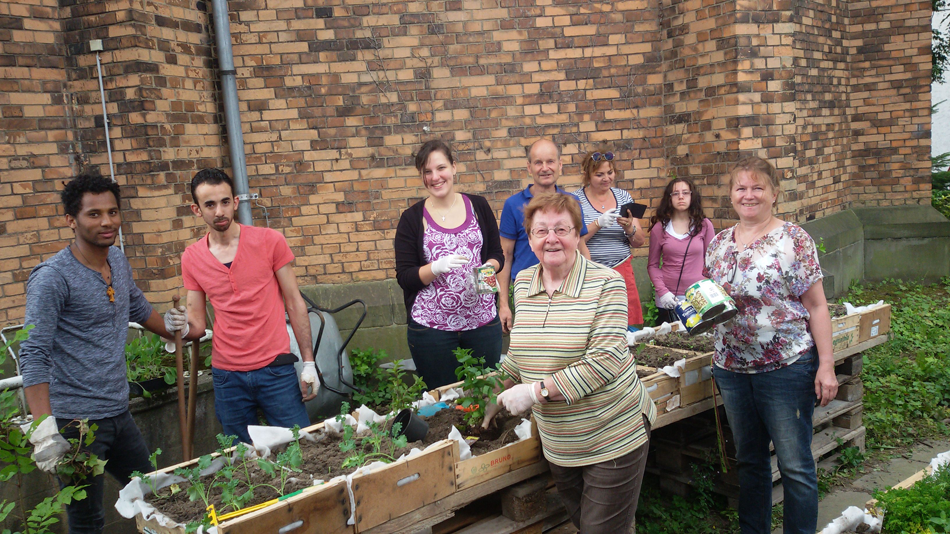
Urban gardening is also happening in Arrenberg: At Dalsterhof, the neighborhood garden project—featuring raised beds, bees, an orchard meadow, and a potato patch—is entering its fourth season. In the courtyard of Café Simonz, neighboring families tend to raised beds to grow fresh vegetables and herbs. A neighborhood garden is set to be created on the banks of the Wupper next to the Pestalozzi Bridge; at the youth center, an inclusive gardening project for children has been launched in collaboration with the organizations “Behindert – na und?” and Aufbruch am Arrenberg; and in the courtyard of the Protestant parish’s community center, lettuce and herbs are growing as part of an intergenerational gardening project.
Cooking together and learning from one another—that’s what neighborhood cooking classes are all about. Whether it’s sushi, cookies, or chocolates, amateur chefs showcase their skills in the community kitchen and share them with others.
Cooking together, eating together, learning from one another—that’s the goal of “The Taste of My Childhood.” Neighbors cook recipes from their childhoods together and, in the process, strike up conversations about their own traditions and formative experiences.
“Meet Your Farmer”—that could be the motto for the connections between the residents of Arrenberg and the organic farmers in the Windrather Valley. One of the goals is to promote the sale of locally produced goods. In practice, this is achieved through the Community Supported Agriculture program at Hof Vorberg.
Inspired by the establishment of so-called food councils in other cities, a group of activists has formed in Wuppertal with the aim of promoting sustainable, regional, and organic food in the valley.
More projects and ideas are in the works: connecting local food professionals, an interactive city tour exploring the climate impacts of our diets, neighbors cooking for lonely neighbors at “Nachbartisch,” a chopping party, harvest events, market gatherings, food swaps, a homebrewing group, and much more…


Susanne
06.05.2026 17:33ich kann gar nix ankreuzen